Join the waitlist. First run capped at 100 units.
WindWarner Join the waitlist

The wind alarm for caravan awnings

Your weatherman should be local.

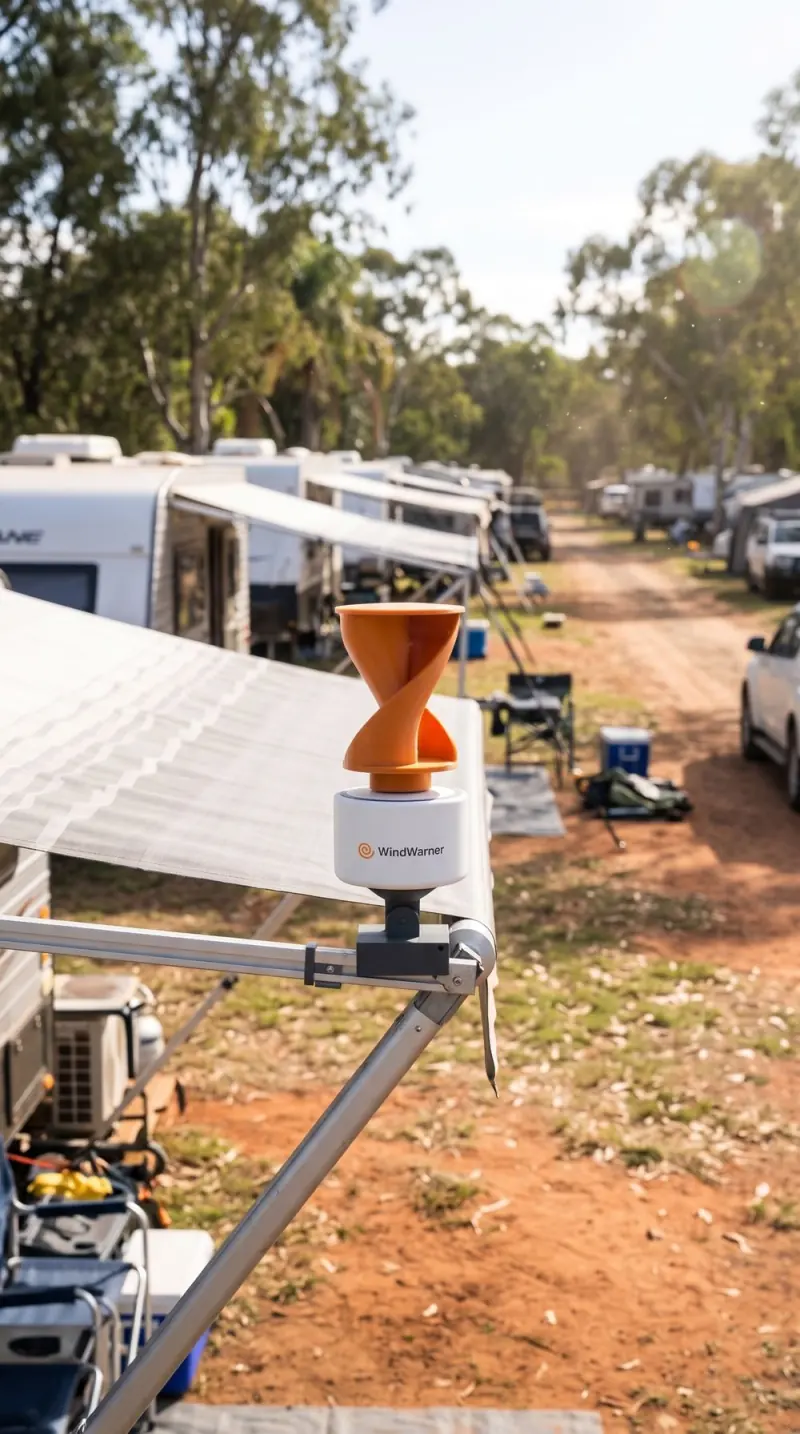
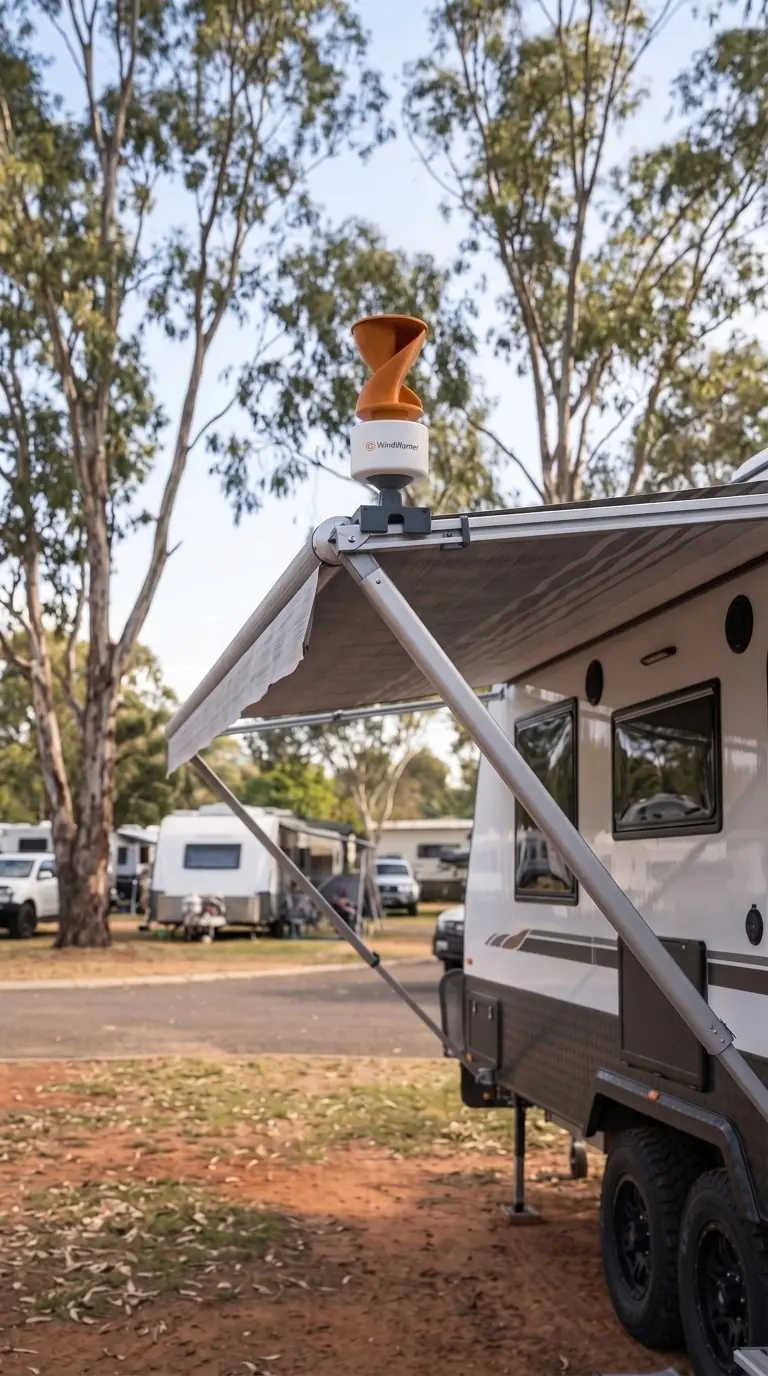
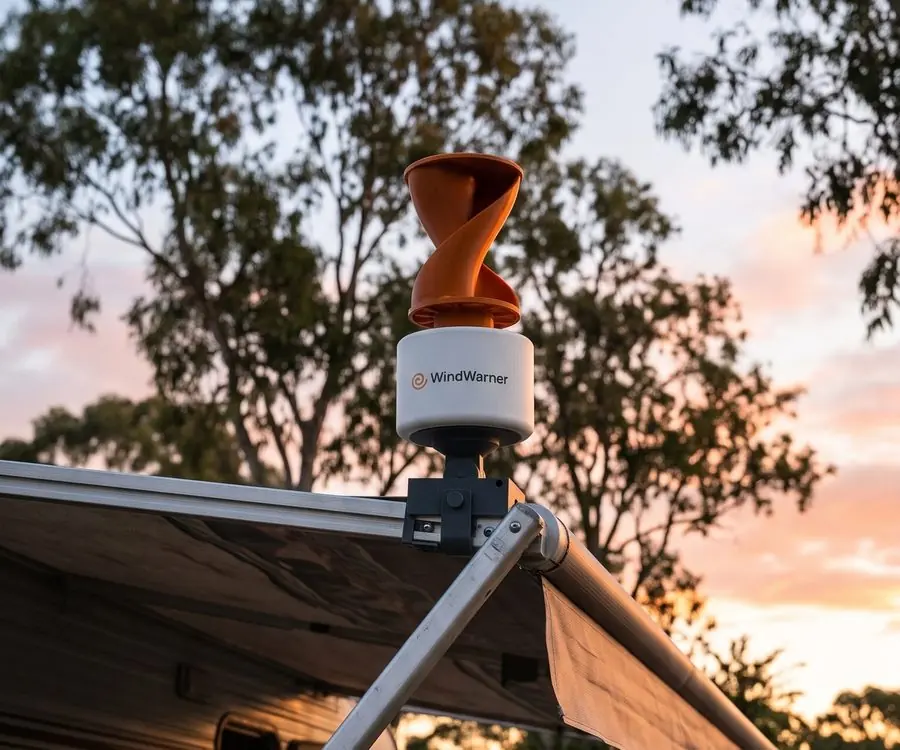
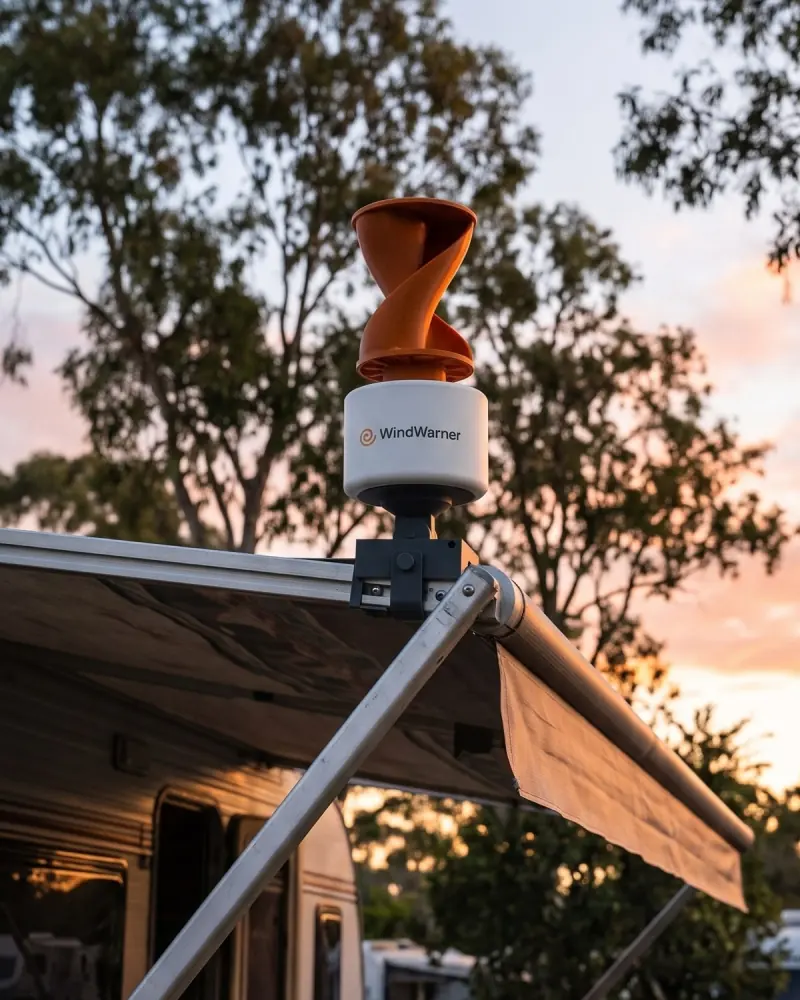
WindWarner close up on the outer edge of a caravan awning at golden hour, orange rotor in clear air above the rail

WindWarner clips to your awning rail, reads the real wind on your site, and sounds a loud siren in time to wind it in.

Coming soon. Launch price to be confirmed, no delivery date promised yet.

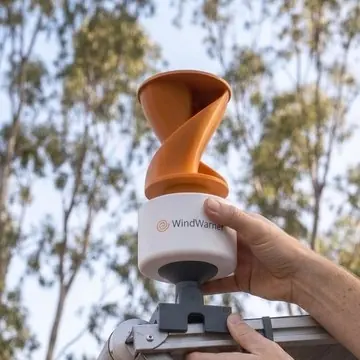
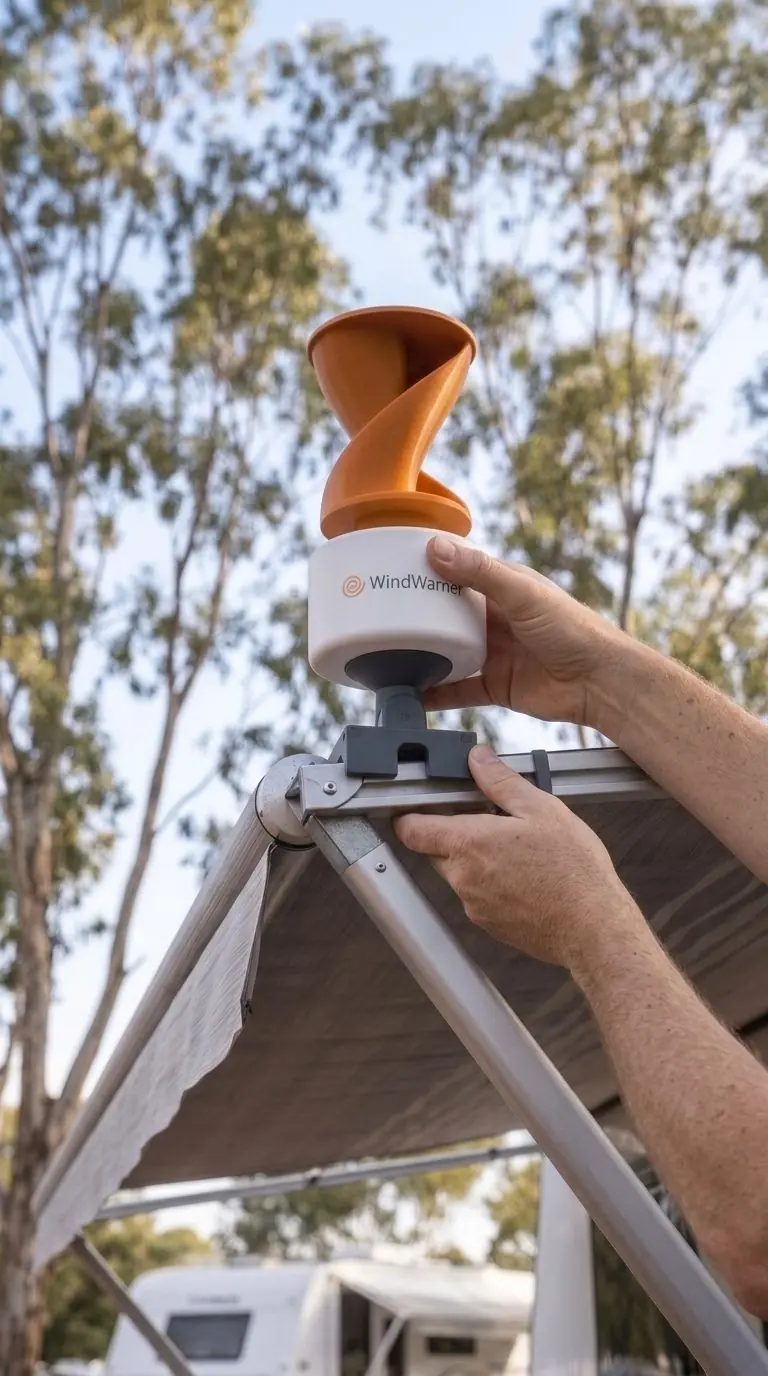
  • Hands clipping WindWarner onto an awning railClips on in seconds
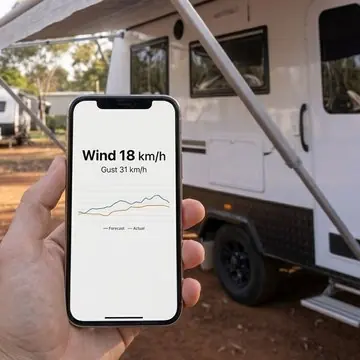
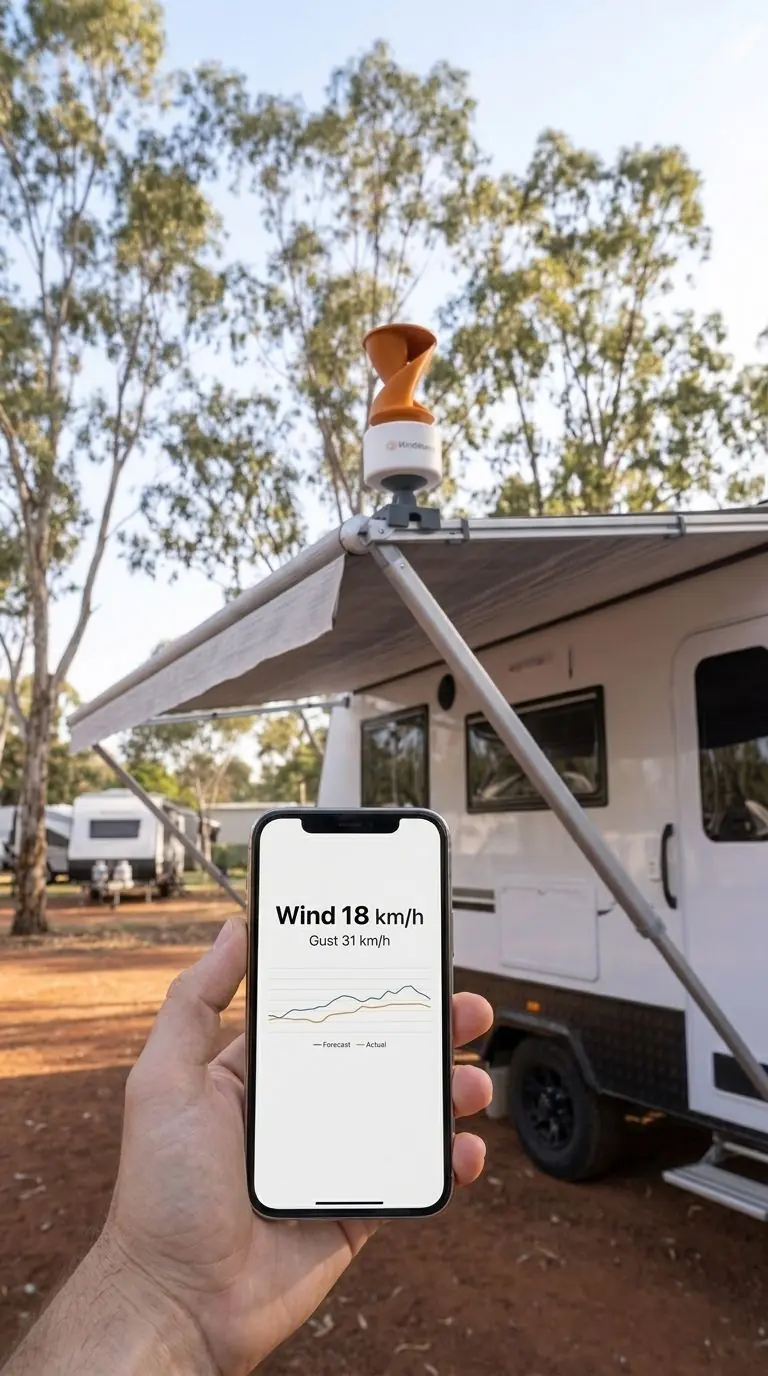
  • Phone showing the WindWarner app, wind 18 km/h, gust 31 km/hLive wind on your phone
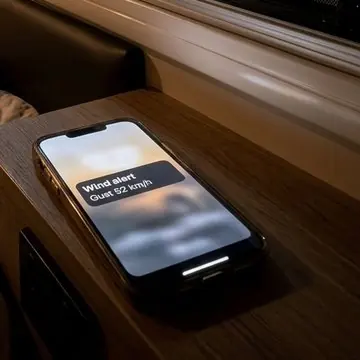
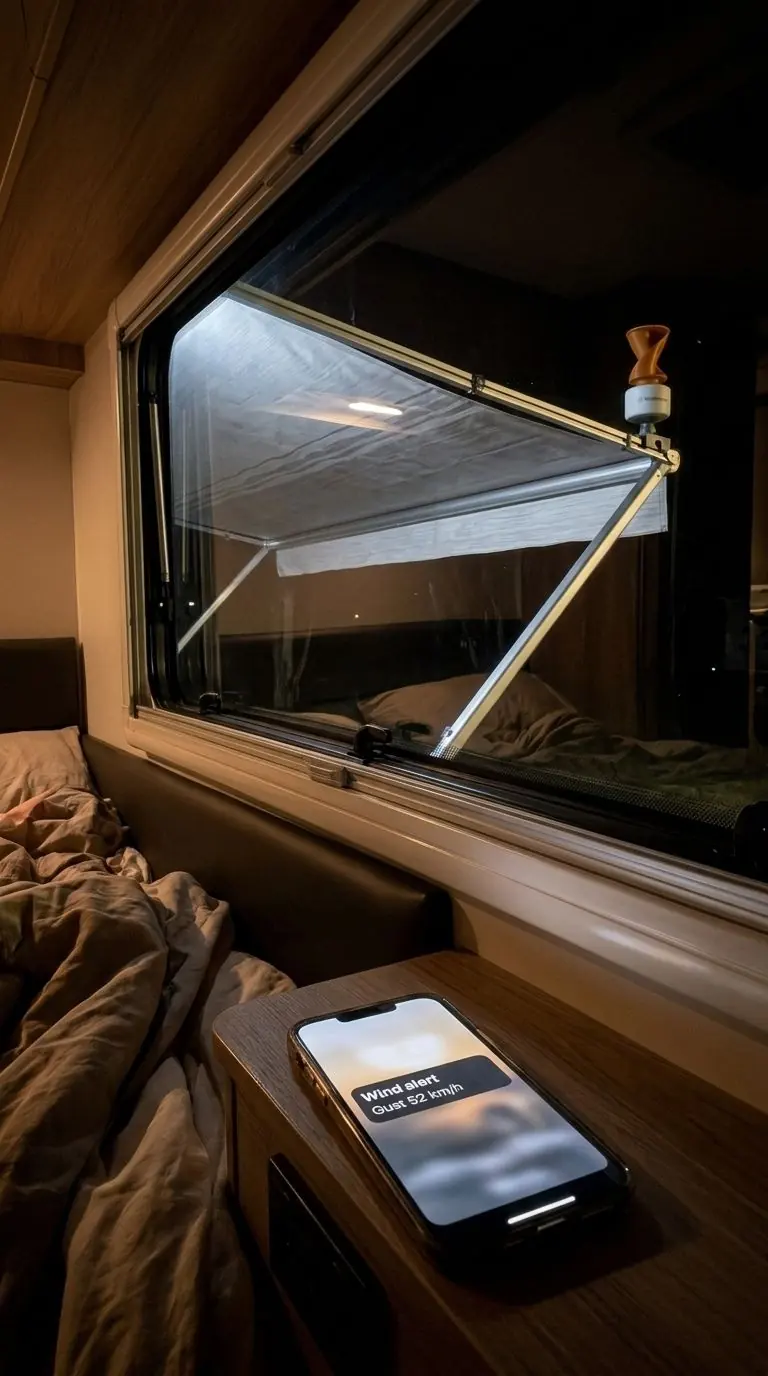
  • Phone on a bedside table showing a WindWarner wind alertWakes you at 2am
  • Clips on in seconds
  • Loud outdoor siren
  • Phone alerts
  • 3-second gusts
  • Your limit, 15 to 60 km/h
  • Temperature, humidity, pressure
  • Forecast vs actual
  • Weeks per charge
  • No tools, no screws

18% of NRMA caravan claims were for awnings damaged by wind or storm. Nearly 1 in 5 claims.

A replacement roll out awning runs about $800 to $2,200 for the product alone in Australia, before fitment. Read the NRMA guide

What it does

An alarm built for your awning. Reading the weather around it.

Wind is the main job, and it does it properly. The same unit also reads temperature, humidity and air pressure on your site, and puts it side by side with the local forecast, live on your phone.

The main event

Live wind and gusts

The rotor sits in clear air above your awning rail and measures the wind on your site: 3 second gusts and a 2 minute average, not a forecast modelled for a town 40km away.

2 min avg18km/h
3 sec gust31km/h
Limit30km/h

A loud alarm, two ways

A siren on the outdoor unit, loud enough to wake you in the van, plus an alert in the app. It trips on 2 gusts over your limit in 60 seconds, or 1 big gust 15 km/h over. Mute it until it clears.

Temperature, humidity, pressure

Live readings from your site, plus the pressure trend, so you can see the weather shifting.

Local forecast vs actual

The forecast for your phone's location, plotted against what your awning is really copping.

Knock, tilt and battery

The app tells you if the unit is knocked, tilted or falls, and shows battery percent and charging status.

Alarm limit you set, 15 to 60 km/h Clips on in seconds, no tools Weeks per charge on USB-C Your phone is the screen

Built for the awning job: wind speed and 3 second gusts measured on your site, a loud siren and a phone alert when it gets too strong, plus temperature, humidity and air pressure, all in one clip-on unit.

How it works

Clip it on. Forget it. Until it matters.

Two hands holding the WindWarner unit, about to clip it onto the awning rail
1

Clip it on

The M1 quick clip saddle goes straight over the awning rail. Seconds, no tools, no screws. Take it off when you pack up and store it inside the van. It is never left on while you travel.

WindWarner mounted on the outer edge of a caravan awning in a caravan park, rotor in clear sky
2

It watches the gusts

Set your limit, 30 km/h by default, adjustable from 15 to 60 km/h. About the size of a coffee mug, bright orange, spinning in the open. People walking past will ask you about it.

Phone on a bedside table at night showing a WindWarner wind alert, gust 52 km/h
3

It wakes you up

A loud siren on the outdoor head, plus an alert on your phone. Enough warning to get up, wind the awning in, and go back to bed, instead of picking it off the roof at daylight.

The app, in your hand

Forecast said one thing. Your awning felt another.

The app is kept simple on purpose. Big numbers, no clutter, readable at 2am with one eye open.

  • Live wind and gustMeasured on your awning, right now. In the day shot: wind 18 km/h, gust 31 km/h.
  • Forecast versus actualThe local forecast for your phone's GPS location, plotted next to what your awning is really copping.
  • Your limit, your callSet the alarm anywhere from 15 to 60 km/h. Default is 30.
  • Everything on your phoneLive wind and gust, temperature, humidity, pressure, alerts and battery, all in the app, so there is nothing extra crowding the van.
Hand holding a phone showing the WindWarner app, wind 18 km/h and gust 31 km/h with a forecast versus actual graph, the WindWarner unit smaller than the phone in the background
Day: check it over coffeeFull screen in hand, hand and all. WindWarner sits smaller than the phone behind it, that is its real size.
Phone on a bedside table at night showing a WindWarner wind alert with gust 52 km/h, WindWarner visible outside the window
Night: it comes to youWind alert, gust 52 km/h, on the phone beside the bed. The awning is still out in that shot, because the alert is what tells you to wind it in.

Built for 2am

The blow that wrecks awnings rarely sends an invite.

Most awning damage happens when nobody is watching: overnight, or while you are out for the day. WindWarner keeps watching either way, and it does not need you awake to start shouting.

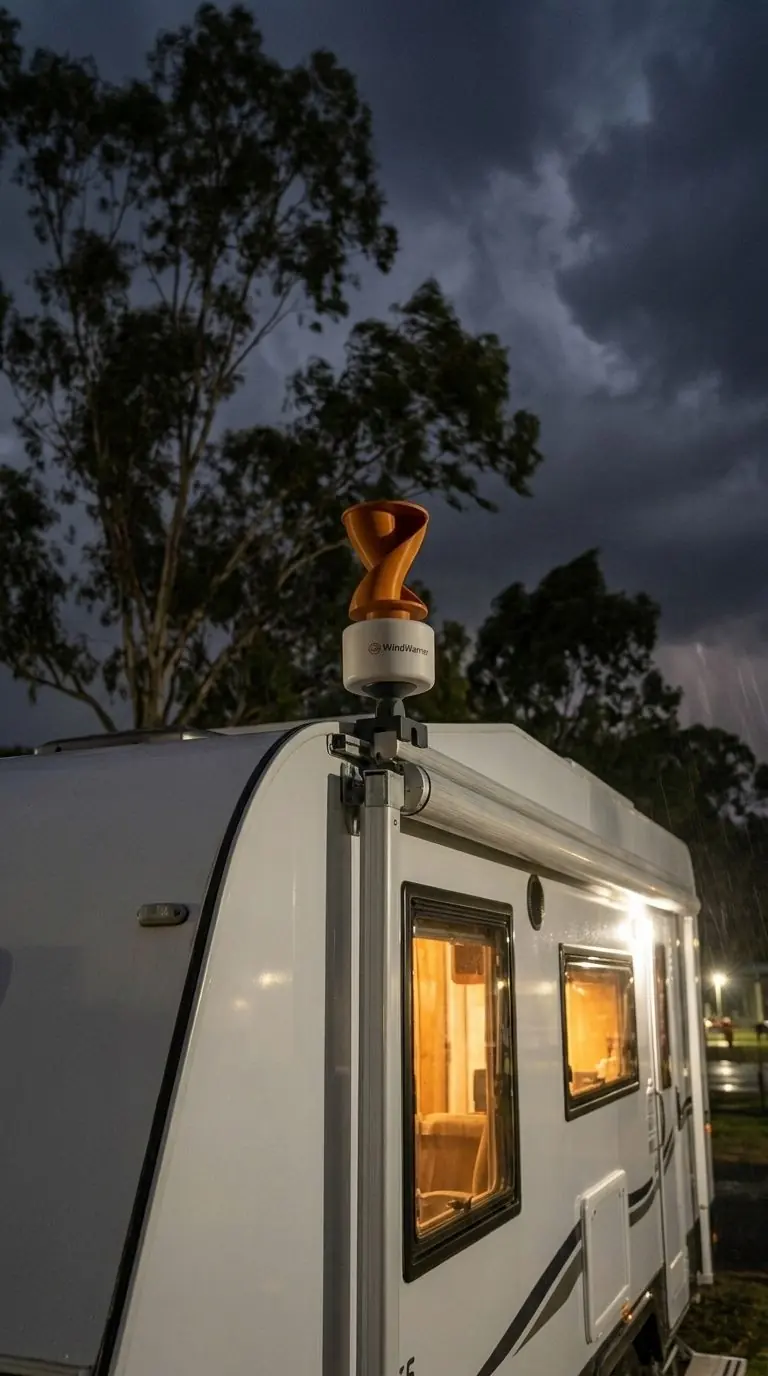
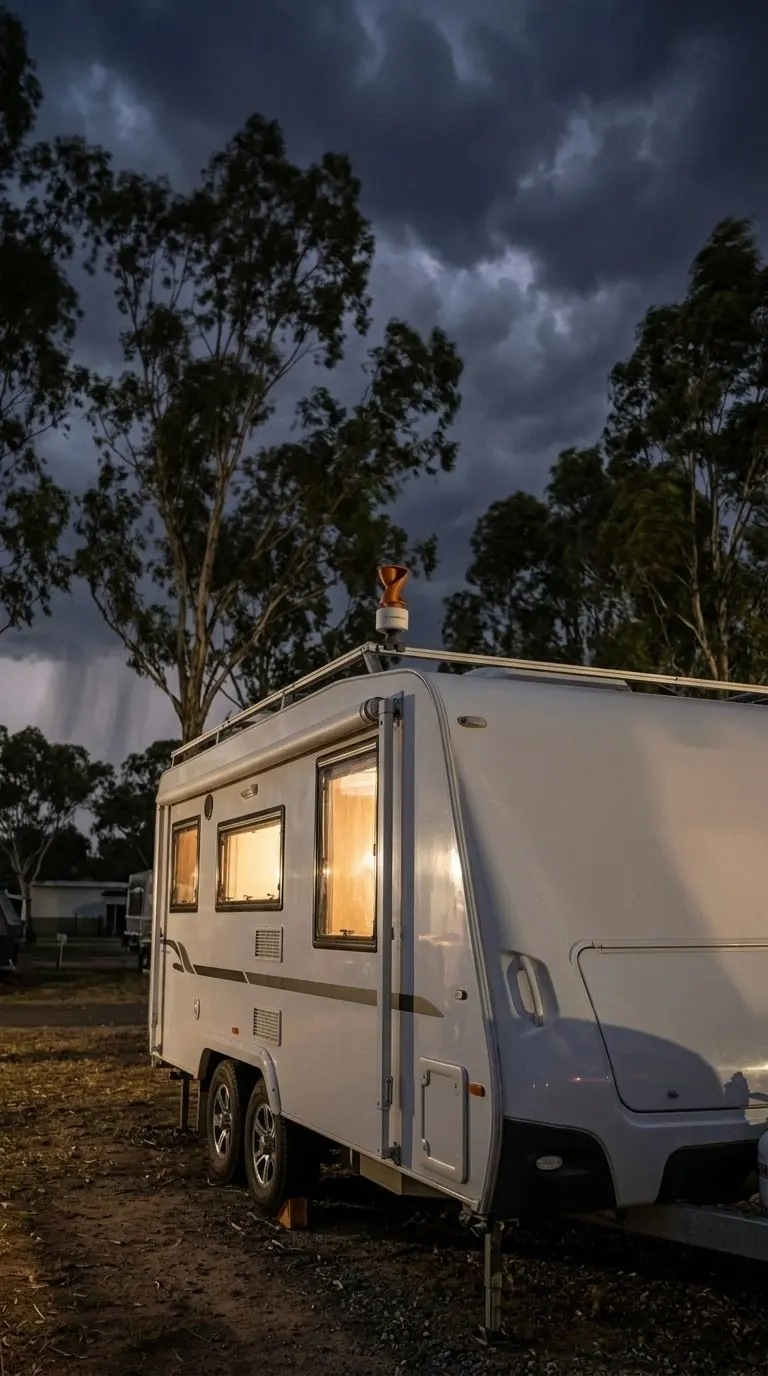
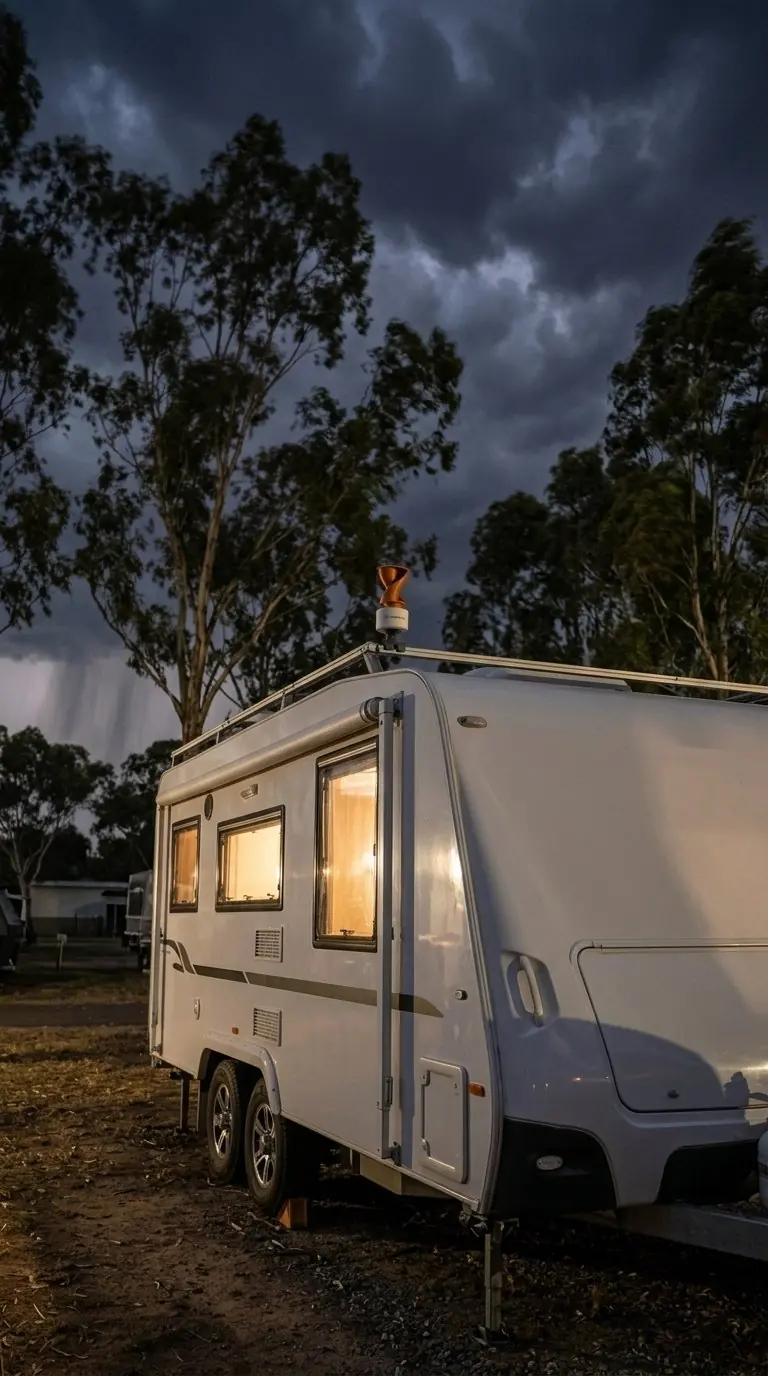
WindWarner mounted on a caravan roof rail at night in storm light, logo readable, quick clip saddle over the rail
Up on the rail, all nightRoof rail mount with the same quick clip saddle. No loose strap, no cord running inside, nothing for water or bugs to follow in.
Wide night storm shot of a caravan with its awning wound in and WindWarner mounted, storm clouds behind
Awning in, storm still comingThe wide shot after the alert did its job: awning safely in, WindWarner still up top watching the weather roll through.

Siren on the head

The outdoor unit carries its own loud siren, so the warning does not depend only on your phone.

Alert on your phone

Your phone is already next to your head when you sleep. The alert lands there, with the gust that triggered it.

Weeks per charge

USB-C charging, two LiFePO4 cells, no solar panel to mount. Estimated about 18 storm days, or about 11 weeks of normal camping, per charge. Estimate only, not measured yet.

On vans, in parks

Where you will see it

This is WindWarner as you will actually come across it: on the van beside you, at walking-past distance, in the parks you already stay in.

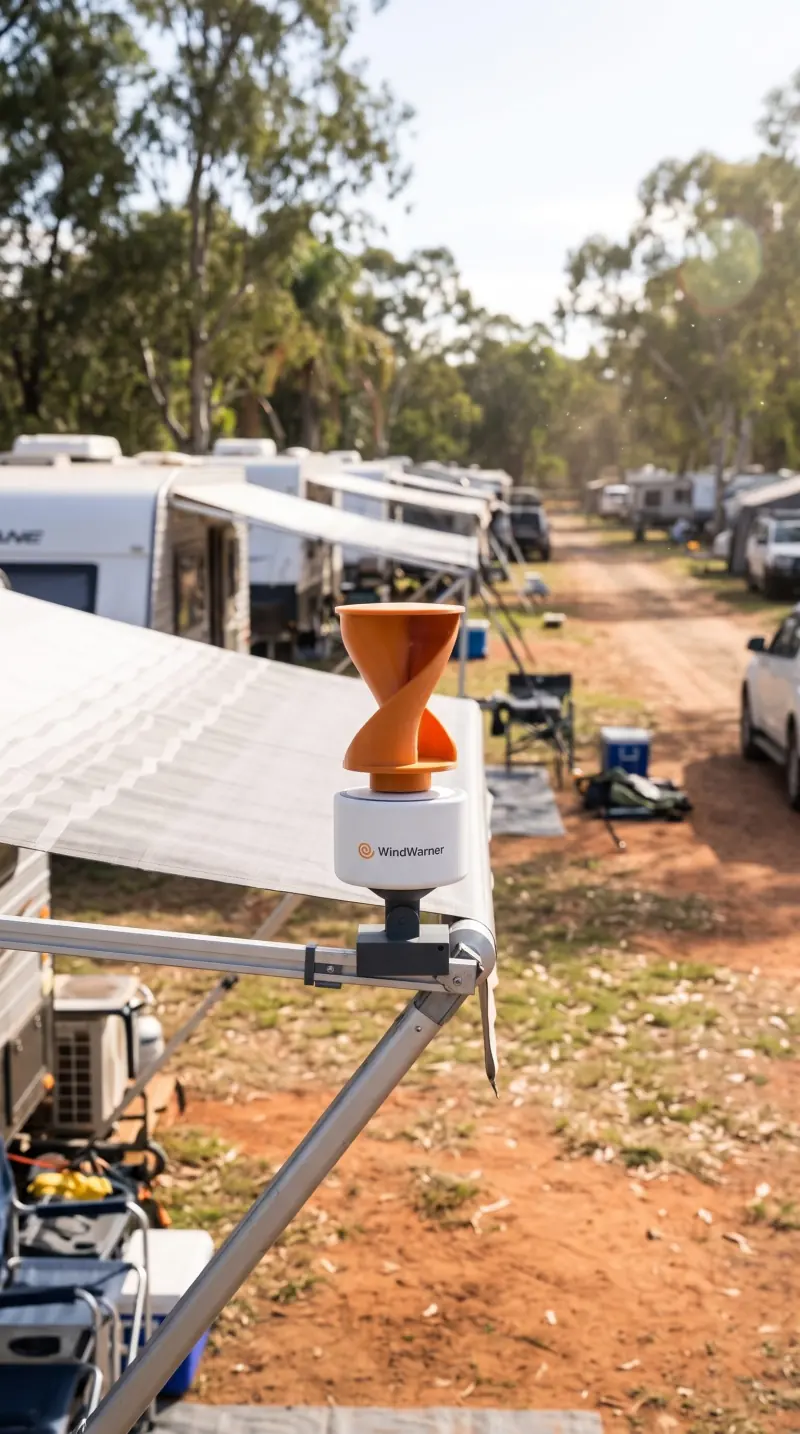
WindWarner on the outer edge of a caravan awning, with a row of vans down a red dirt caravan park behind it

Bright orange on purpose.

It sits outside the van, it spins, and people walking past ask about it. That is the idea.

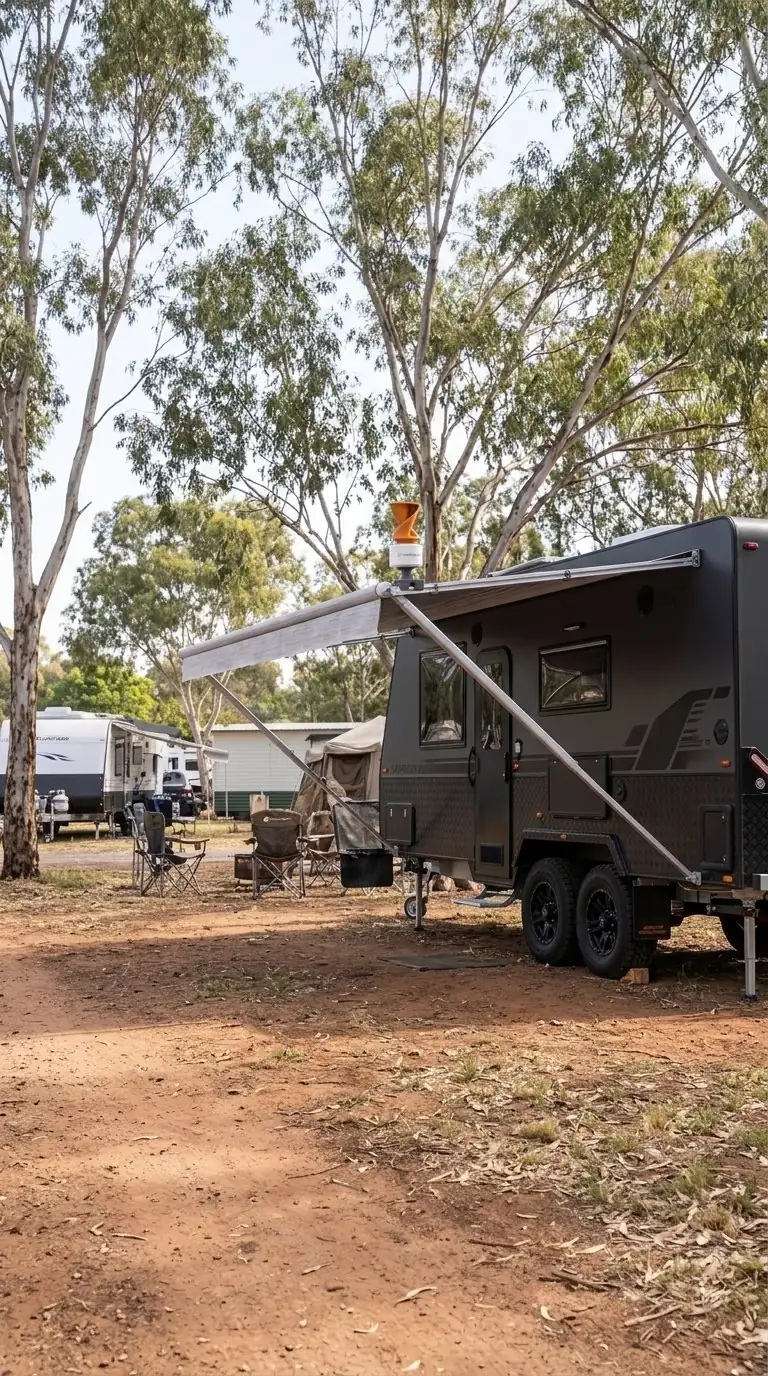
WindWarner on the awning rail of a black off-road caravan at a bush park
WindWarner on the far outer edge of a white caravan awning on red dirt
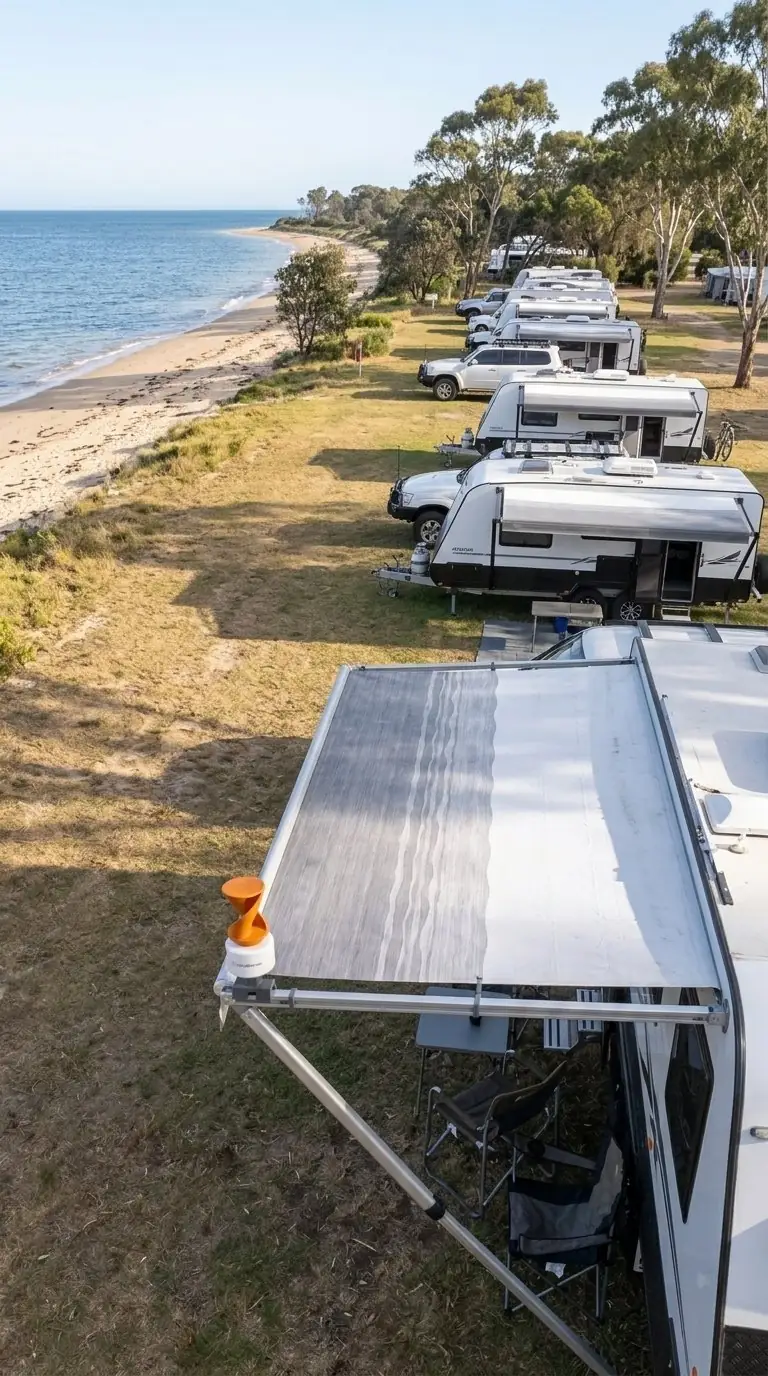
Beachfront row of caravans with WindWarner on the foreground awning
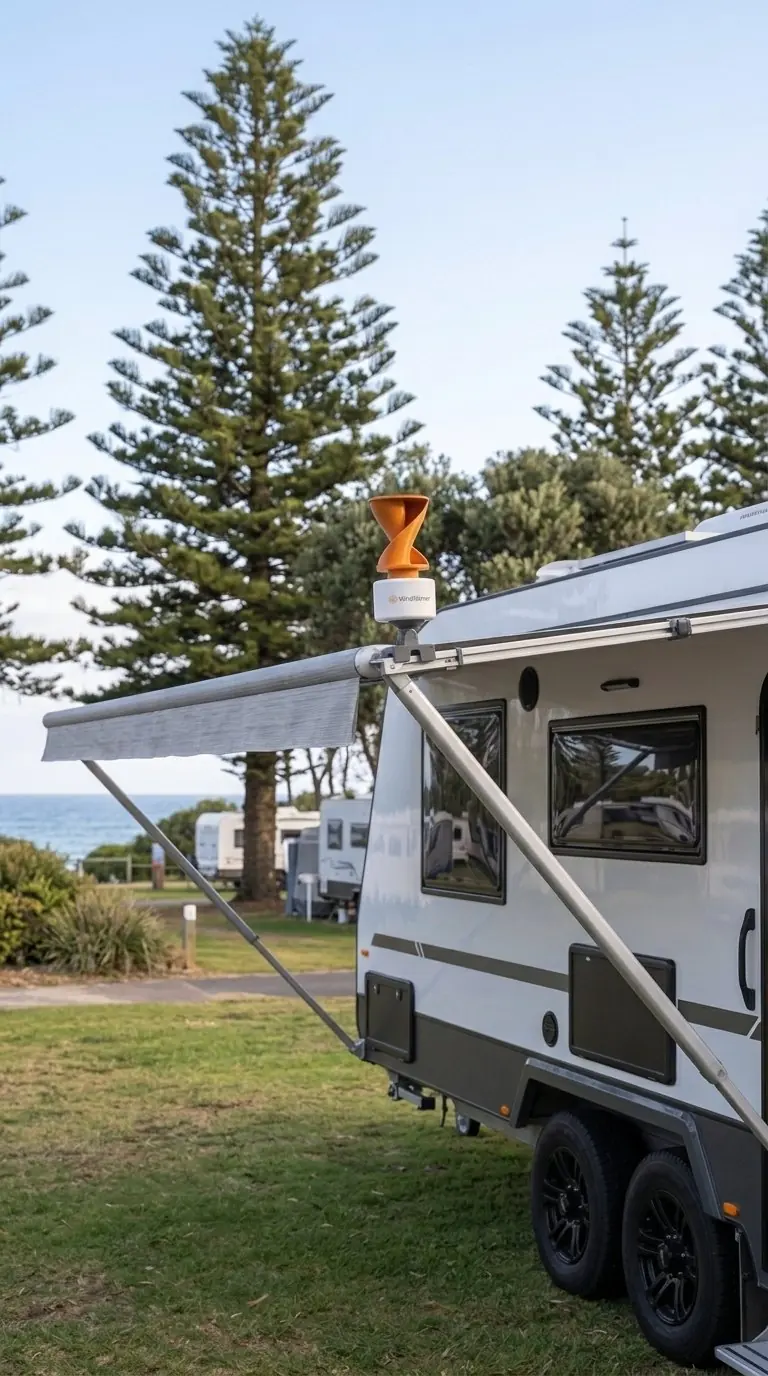
WindWarner on a caravan awning at a coastal park with Norfolk pines
Caravan with its awning wound in and WindWarner on the roof rail under storm clouds
WindWarner close up on an awning rail at golden hour

First run — capped at 100

Join the waitlist. Hear first.

The first production run is deliberately small, capped at 100 units, so every early buyer gets a unit that was built and checked properly.

  • First access, in the order you joined
  • Build updates as the first units come together

Your email

Join the waitlist. That is all it asks for.

By joining you agree to receive WindWarner launch emails. Unsubscribe anytime.

First run: 100 units.

Questions

Asked at every park

Will it fit my awning?

It mounts with the M1 quick clip saddle straight over the awning rail, no screws and no drilling. It is portable by design: clip it on when the awning goes up, clip it off and store it inside when you pack up.

What does it measure?

Wind speed and 3 second gusts, measured by the rotor right on your awning, and that is what drives the alarm. The same unit also reads temperature, humidity and air pressure on your site, and the app shows it all live on your phone.

What wind speed should I set?

It ships set to 30 km/h, and you can adjust it anywhere from 15 to 60 km/h in the app, so you can match it to your awning and the conditions where you camp.

How does it wake me if my phone is on silent overnight?

That is exactly why the outdoor head has its own loud siren. The app sends an alert to the phone beside your bed too, but a phone on silent or Do Not Disturb may not sound it, so the siren is what makes sure you hear it.

How long does the battery last?

It runs on two LiFePO4 cells and charges over USB-C, no solar panel needed. The current estimate is about 18 storm days, or about 11 weeks of normal camping, per charge. That is an estimate from the design figures, not a measured result yet, and it will be updated once real boards are running.

Is there a screen for inside the van?

Your phone is the screen, so there's no extra box in the van. It shows live wind, gust, temperature, humidity, pressure and forecast versus actual, all in one place.

When can I get one, and what will it cost?

Join the waitlist and you will hear first. The launch price is still to be confirmed, so it is not printed here, and no delivery date is being promised yet. The first run is capped at 100 units.

Join the waitlist